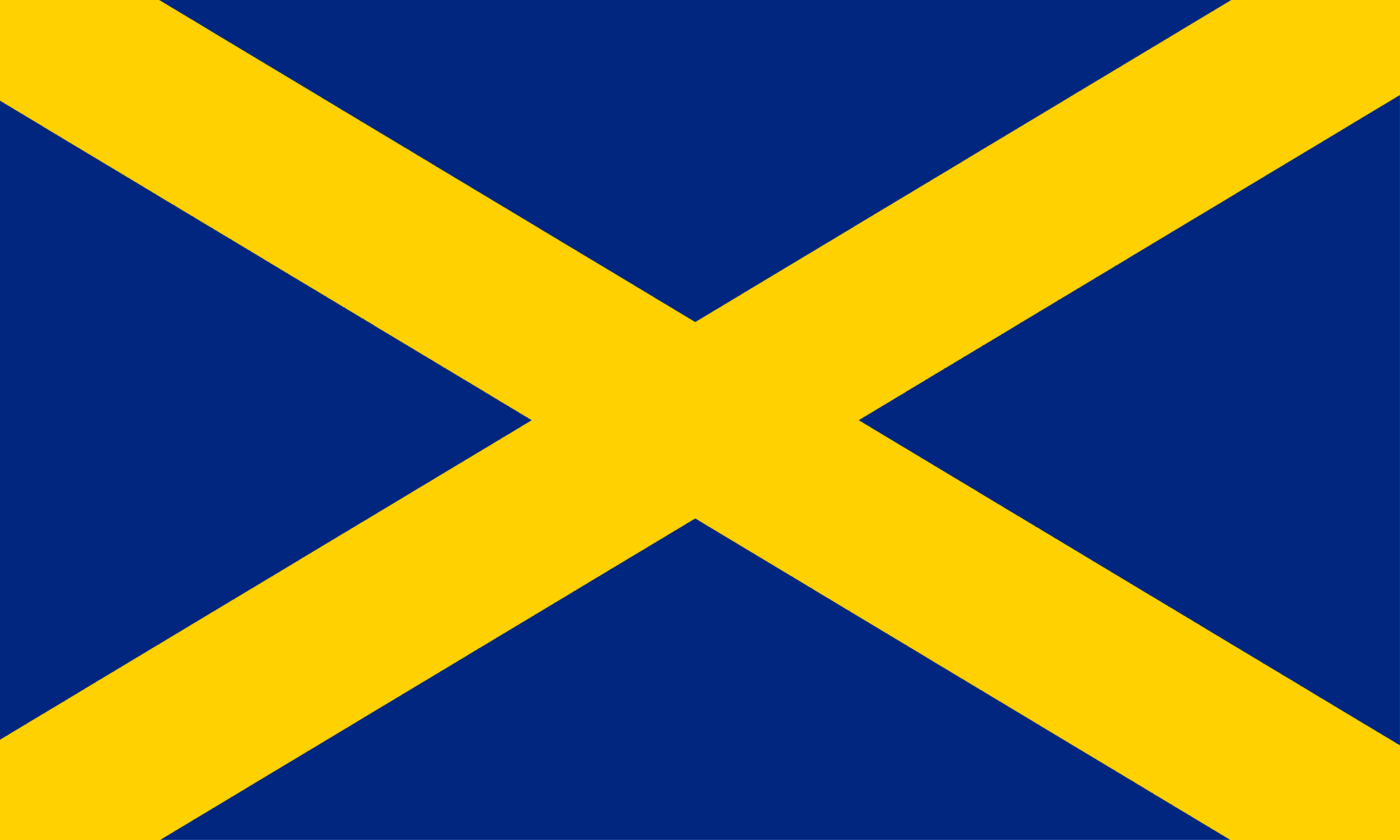
Regional flag
Mercia
- Flag type
- Regional flag
- Flag date
- C8th-C17th
- Designer
- Traditional
- Adoption route
- Traditional
- Aspect ratio
- 3:5
- Pantone colours
- Blue 280Yellow 109
- Certification
- Flag Institute Chief Vexillologist, Graham Bartram
About the flag
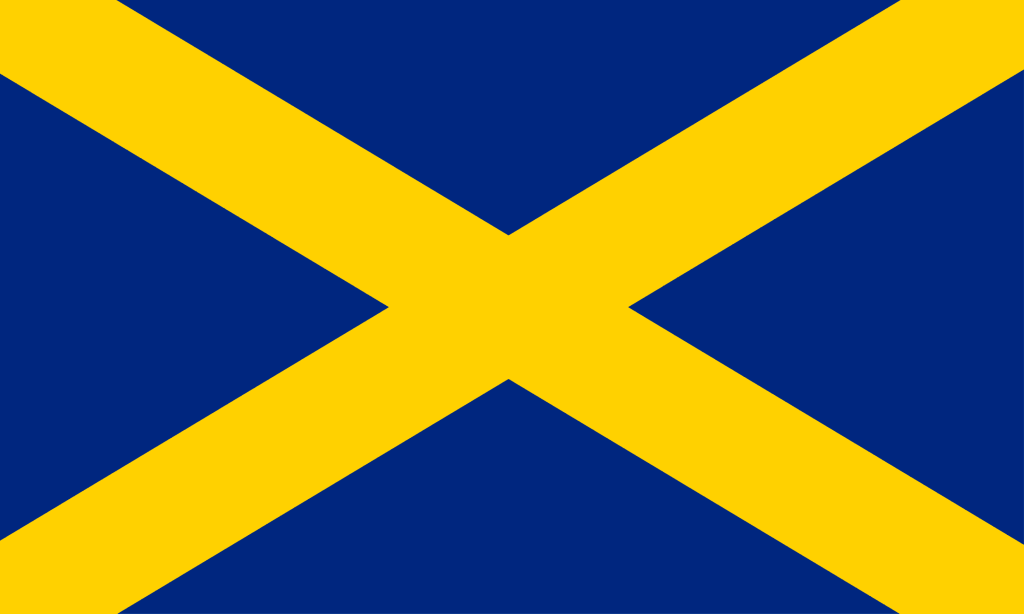
The Mercia Flag is a community flag proclaiming the unique identity of this historic region.
Mercia was one of the most powerful kingdoms of Anglo-Saxon England.
Its territory extended over the modern English Midlands, and the term ‘mercii’ continued to describe men of that region.
In 1387, for example, the cleric and translator John Trevisa (c. 1342–1402) wrote of the ‘Mercii, that beeth men of myddel Engelond’.
The arms of a gold saltire on blue reference St Alban (d. 305 CE), the first British martyr.
They represent Mercia in the maps of John Speed (1552—1629) and are also used by the town of St Albans in Hertfordshire.
In The Romance of Heraldry (1929), C.W. Scott-Giles argues that the saltire was a Mercian symbol adopted by the town after King Offa dedicated a monastery to the saint in 793 CE.
More definitely, the first documented evidence for its use by St Albans comes a couple of decades after Speed used it to represent Mercia.
Tamworth Castle, in Mercia’s historic capital, continues to fly the flag every day.
Its flag is in a shade of darker blue than that of St Albans, helping to differentiate between them.
The Mercia Flag registered here uses this darker shade of blue.