
Flag of Liechtenstein
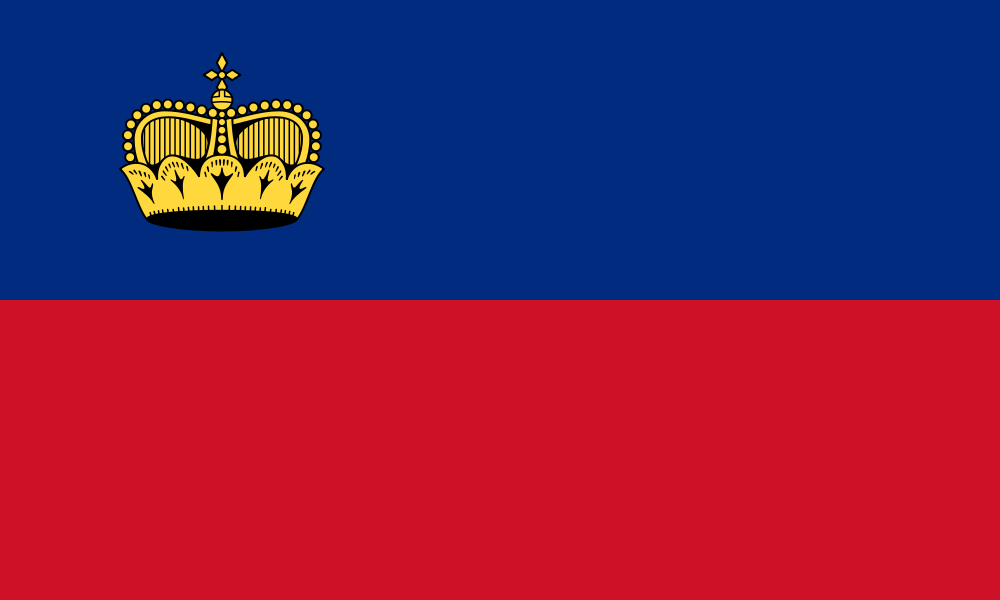
The Principality of Liechtenstein is a microstate lying between Switzerland and Austria.
Formed in 1719 within the Holy Roman Empire, Liechtenstein joined the German Confederation in 1815, gaining its independence in 1866.
From 1719, it used the banner of the Princely House – a horizontal bicolour (gold over red) in 3:5 proportions – as its national flag.
In 1852, vertical bands of red and blue, the colours of Prince Joseph Wenzel I (reigned 1712–18, 1732–45 and 1748–72), replaced the gold and red.
Further change came in the aftermath of the First World War and the fall of the Hapsburg monarchy.
In 1919, Switzerland replaced Austria as Liechtenstein’s representative abroad.
Then in 1921, Liechtenstein adopted Swiss currency, and that October the Constitution gave official status to a new national flag: a horizontal bicolour of blue over red.
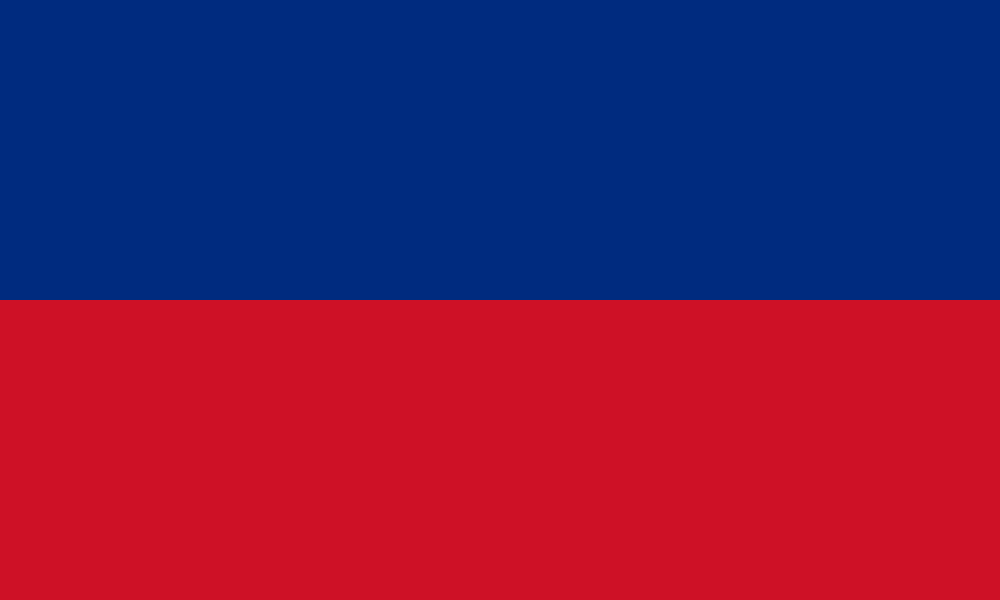
Liechtenstein flag (1921–37)
Yet the flag still lacked its most notable feature – the gold crown in the canton.
One flag for two nations
Liechtenstein made its Olympic debut in 1936 – in the Winter Games at Garmisch-Partenkirchen, then in the Summer Games in Berlin
At the Opening Ceremony in Berlin, spectators spotted that the flags of Liechtenstein and Haiti were identical.
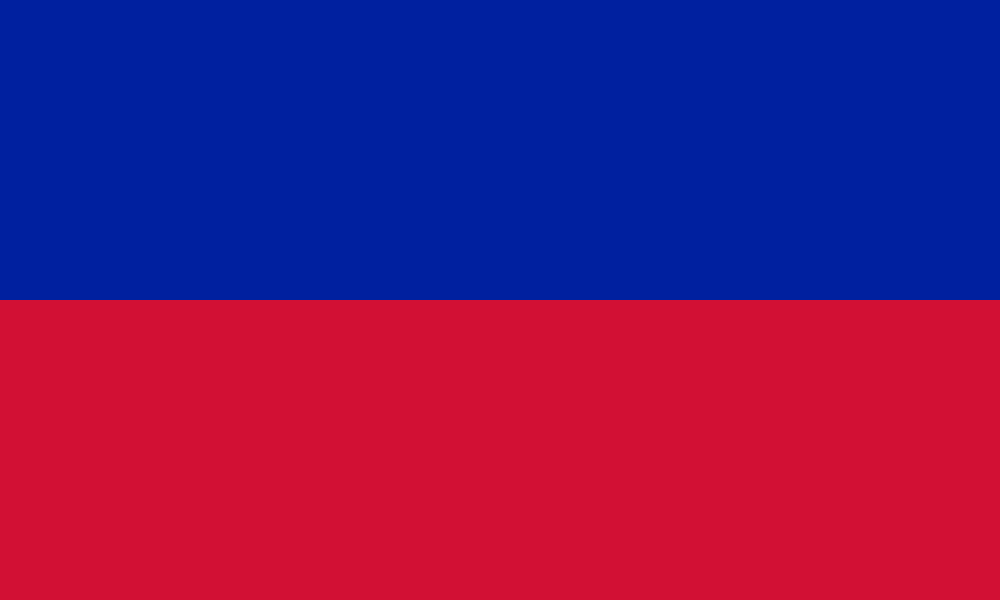
Flag of Haiti (c.1860–1957).
Fortunately, this caused no further problems.
None of the six Liechtenstein athletes won medals, and Haiti’s lone representative withdrew before competing.
To distinguish its flag, however, Liechtenstein added the now-familiar crown on 24 June 1937.
Unveiling the updated flag, Prime Minister Josef Hoop (1895–1959) clarified its symbolism:
- blue represented the sky
- red evoked the embers in a fireplace during an evening gathering
- the gold crown represented the united heart and spirit of Liechtenstein, its people and its Princely House
Saddam’s plane
In late February 2004 the Liechtenstein flag made the news again.
In accordance with UN Security Council Resolution 1,483 (2003), Liechtenstein requested the seizure of a Falcon 50 private jet that had belonged to Saddam Hussein.
The Swiss-registered plane, carrying the Liechtenstein flag, was seized in Amman (Jordan) and flown to Basel.
There it was entirely revamped and in December 2005 became the first aircraft seized under UN sanctions to be returned to Iraq.
Bonus fact: Not only did Liechtenstein share its flag with another country, it also shares the music of its national anthem.
The melody to Oben am jungen Rhein (High on the Young Rhine) is identical to that of God Save the Queen.
Author: Alex Crouch (Flag Institute accredited journalist, 2015/16)